The thread in your sail
Published on: 2026-10-08
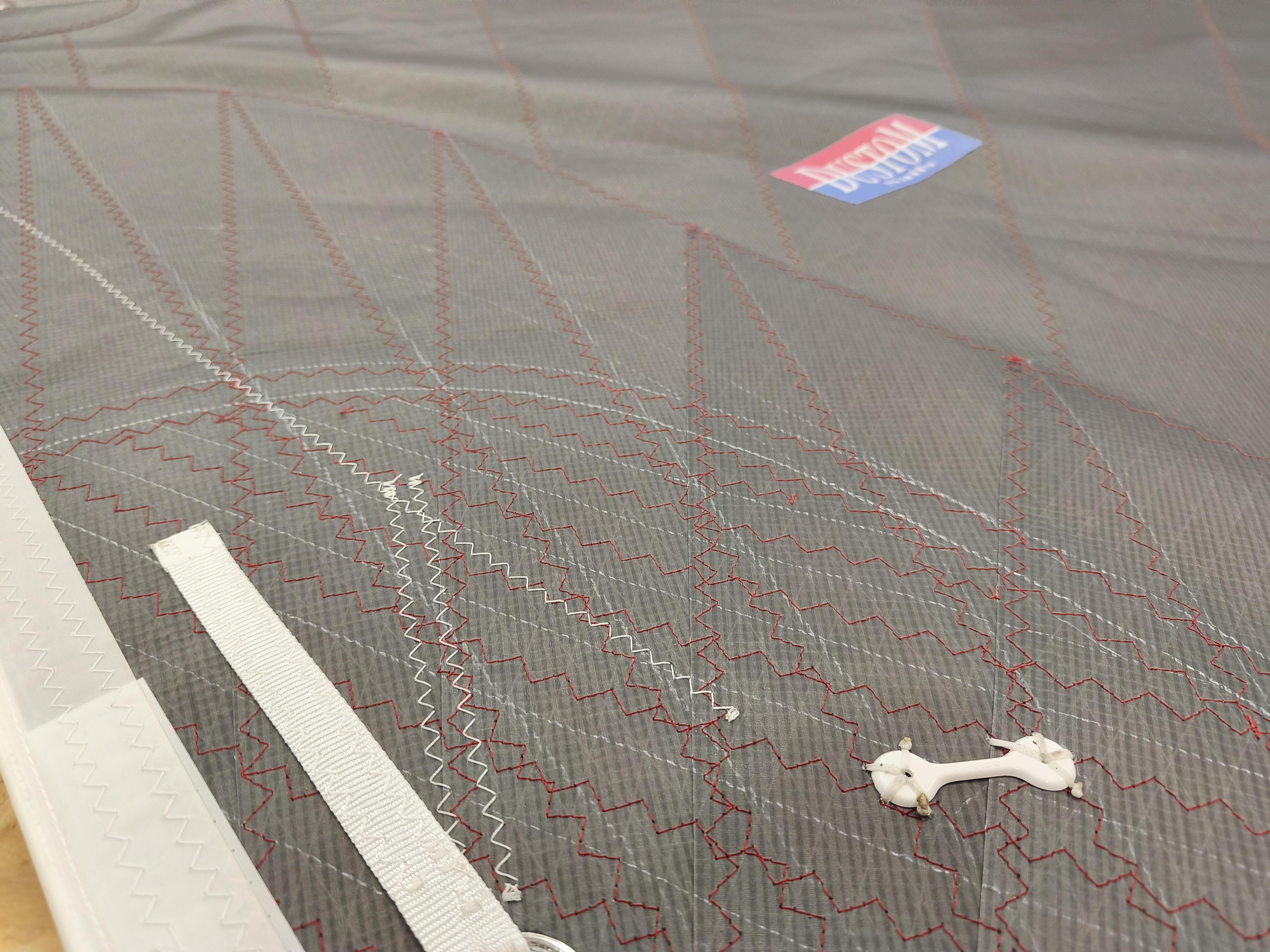
Almost every cruising sail is held together by hundreds of meters of stitching. Sailcloth gets the attention, but the thread is also a very important component for the sail's life span. Modern cruising sailcloth, which like the thread is most often made of polyester but is far thicker, retains its strength for more than 10 years of normal use. The much finer sewing thread in the seams typically begins to weaken after 5–10 years of sun exposure, and in strong-sunshine climates in as little as 3–5 years.
How sails came to be sewn the way they are
For most of sailing history, sails and their stitching were made of natural fibres such as flax, hemp, and later cotton. These materials rot. Mildew, salt, and moisture destroyed sails and seams as a matter of course, and keeping a suit of sails alive was a constant occupation in every port.
That changed in the 1950s, when polyester entered sailmaking. Polyester thread is strong, keeps its shape under load (essential for a sail that must hold its form in the wind), tolerates ultraviolet light far better than any natural fibre, and does not rot. Nearly every cruising sail made since has been sewn with polyester thread, and today the sailmaking trade is supplied by a small number of specialised industrial thread makers.
What modern sails are sewn with
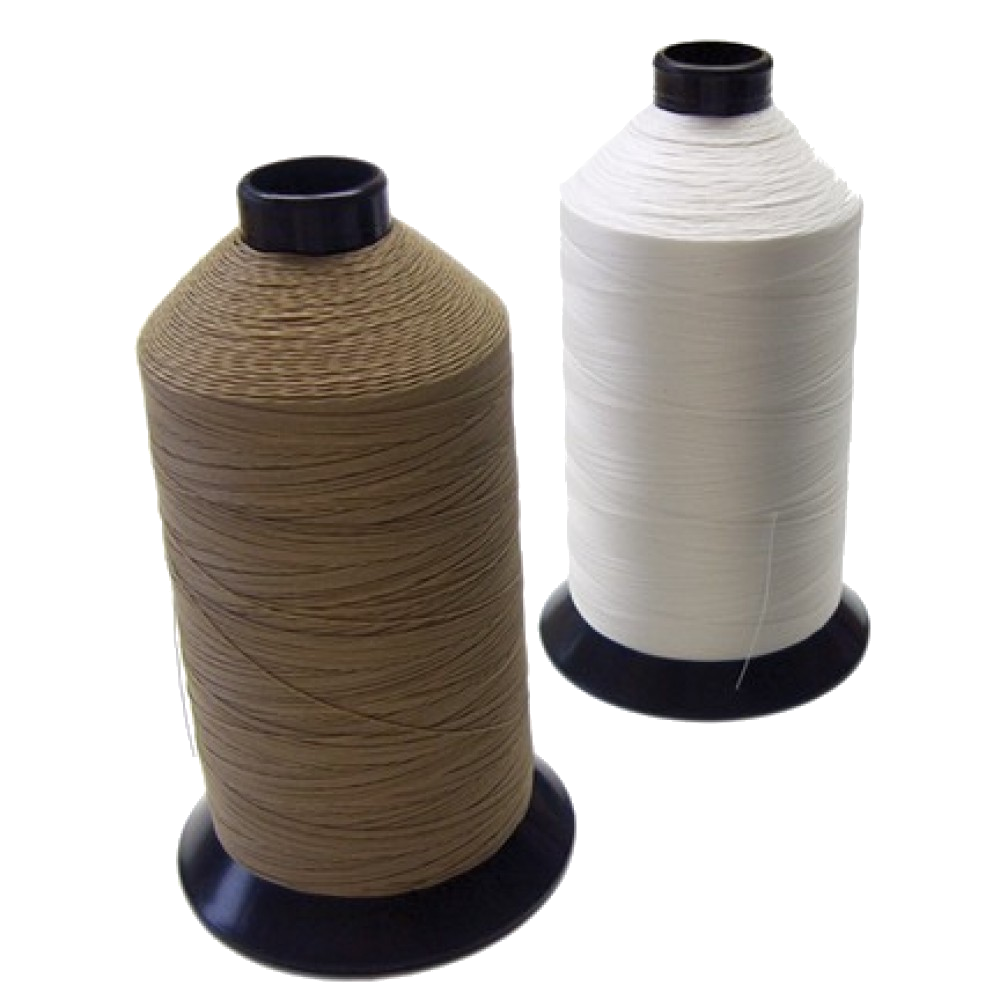
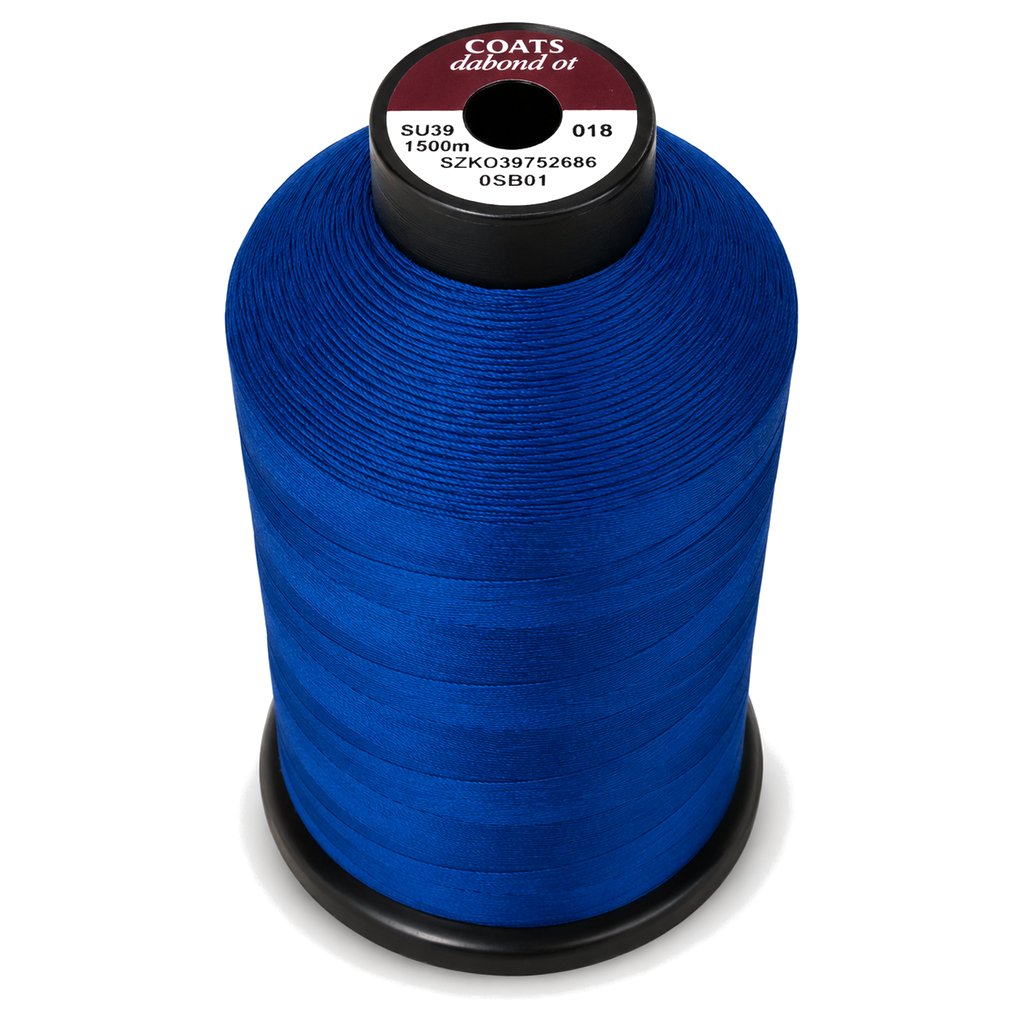
The standard thread for sail and marine canvas work is bonded, UV-resistant polyester, a high-strength continuous filament thread whose plies are coated to prevent fraying and to sew smoothly at machine speed. The brands most commonly found in sail lofts are:
- Coats Dabond, the most widely distributed marine thread, sold worldwide in the standard sailmaking sizes. Long-established in the marine trade; older stock sometimes carries the historic American "Heminway & Bartlett" label, which is the same product.
- A&E SunStop, American & Efird's UV-resistant bonded polyester with a non-wick finish that limits moisture migration through the seams, offered in the standard marine sizes.
- Amann Outdoor Pro, a German premium thread with a water-repellent anti-wick finish, tested and certified for outdoor exposure.
- Liberty Softbond UV, a Dutch marine-industry thread common in European lofts and chandleries.
These are interchangeable in quality. All are designed for years of saltwater and sunlight, resist mildew and rot, and hold seam strength over the normal life of the cloth. This is the thread on which nearly all cruising sails are built; high-end racing sails, by contrast, are largely laminated and glued, so sewing thread plays a much smaller role there. What matters more than the brand is that the thread is a genuine marine product, and that the size suits the job.
Thread in sail seams comes in standard sizes, usually quoted in the "V" scale:
| Size | Where it is used |
|---|---|
| V-46 | Light sailcloth, spinnakers |
| V-69 | Heavy spinnakers, Code 0, light flying genoas |
| V-92 | The general-purpose marine size: most sails, covers, biminis, and marine canvas |
| V-138 | Corners, reef points, and reinforcement patches on sails; heavy sailcloth; storm sails; heavy canvas |
| V-207 and heavier | Ultra-heavy construction such as slings and trampolines, rarely used on sails themselves |
Lifetime thread: PTFE
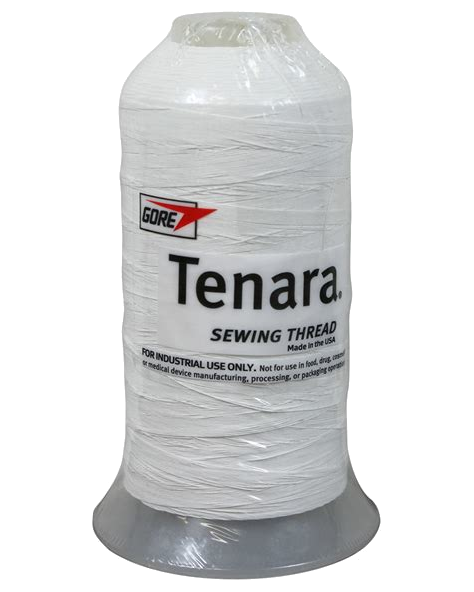
Alongside polyester, sailmakers offer a second category of thread with exceptional properties: PTFE, the fluoropolymer known from non-stick cookware. PTFE thread is completely immune to ultraviolet degradation, and is unaffected by saltwater, bleach, cleaning chemicals, and acid rain. It does not mildew. Manufacturers guarantee it for 15 years or longer, and in practice a PTFE seam will outlast the fabric sewn with it.
The established brands are GORE TENARA (made by W. L. Gore, the company behind Gore-Tex fabrics) and Aruvo (from Fil-Tec), with Coats Helios P and Liberty's PTFE line as alternatives.
PTFE thread costs several times more than polyester, so it is generally offered as an option rather than used as standard.
Where it is normally not worth the premium: the standard panel and patch seams of a sail. Quality polyester performs that duty well for the life of the cloth, and PTFE's behaviour under constant seam load is a matter of debate among sailmakers rather than an established advantage. Some lofts do offer fully PTFE-sewn sails as a premium option for long-distance cruisers.
High-tech fibres: what belongs in a sail and what doesn't
When looking at sails, you will encounter two exotic fibre families, aramid and UHMWPE, through the fabric side of sailing:
Aramid (Kevlar) transformed racing sails in the late 20th century with its enormous strength and resistance to stretch. It appears in sailcloth and laminates, not in sewing thread: aramid thread is abrasive enough to wear out sewing machine parts, is difficult to work with, and has poor UV resistance. Racing sails built around aramid fabric are largely laminated and bonded rather than sewn.
UHMWPE (Spectra/Dyneema) is a very strong, light, and sun-tolerant fibre used in modern sailcloth, but only in high-tech sails. As sewing thread it is tricky to work with, so lofts rarely use it. It is mainly used just for strengthening highly loaded spots on modern high-tech sails, but it plays no role in ordinary cruising sails.
Neither aramid nor UHMWPE sewing thread is used in sailmaking to any real extent; their drawbacks on the sewing machine outweigh their strength, and the seams of ordinary cruising sails are served perfectly well by bonded polyester and, where exposure justifies it, PTFE. Racing sails are mostly glued.
Seam types: how sails are actually sewn
The way thread is laid into a sail matters as much as the thread itself, because different seam types carry load differently. The main seams joining the panels of a sail are sewn with zigzag, and most often with three-step (triple) zigzag, a zigzag with three stitches per point. This stitch distributes the load across a wider area than a straight one and flexes with the cloth, so the seam carries load without restricting the sail's natural give, which is why it is the standard for panel seams, mainsail construction, clew and tack reinforcements, and repairs. Plain zigzag is used where more stretch is wanted than strength: sail edges, leech and foot hemming, and batten pockets, where a stiffer seam would pucker the cloth. Straight stitch rows are used where the cloth must not stretch at all, on corner webbings, hardware patches, and reinforcement areas, where the job is to lock the layers rigidly together.
Caring for the thread: seasonal maintenance
All thread-related sail care comes down to one principle: protect the stitching and you extend the life of the sail. A short routine each season is sufficient:
- Test the stitching with the fingernail test. Run a fingernail along the seams, including the UV strip, corner patches, and batten pockets. Healthy thread feels firm and resists picking. If you notice weakness, meaning thread that looks fuzzy, chalky, or frayed, or crumbles when you scratch it, take the sail for re-stitching at a professional loft. It costs far less than waiting until a seam breaks under load and tears the sail, which turns a re-stitching job into a panel repair.
- Limit unnecessary sun exposure. A sail left flaked on the boom for a season ages its stitching daily. Removing sails when the boat is not in use, and covering canvas properly, directly extends seam life.
- Rinse off salt, then dry thoroughly. Salt crystals abrade thread and hold moisture against it. Rinse with fresh water and allow sails and canvas to dry completely before furling or storing, or mildew will grow along damp seams.
- Take the sail to winter service at the end of the season. The preferred routine is to hand the sail to your sail loft for winter service: professional inspection of the seams and stitching, a proper wash to remove salt and grime, repairs to any small chafe or seam damage before it grows, and dry, folded storage away from sunlight. A sail that winters in a loft starts the next season in known condition, with stitching checked by the people who sew it, instead of spending the off-season flogged on the rig or damp in a bag.
Acknowledgments
The following trademarks and brand names are acknowledged as the property of their respective owners: Coats Dabond, Heminway & Bartlett, A&E SunStop, Amann Outdoor Pro, Liberty Softbond UV, GORE TENARA, Aruvo, Coats Helios P, Liberty PTFE, Kevlar, Spectra and Dyneema.